September is the month of the Harvest Moon (which arrives on Monday the 8th) and with good reason. From late tomatoes and squash to fall favorites like pumpkins to"second spring" lettuce and scallions, in September the Tennessee Valley has it all. No wonder the Tennessee Valley Fair has traditionally been held in September. If you are interested in agriculture at any level, the fair is worth a visit. There will be exhibits of home canning, various cooking demonstrations, horticulture exhibits, fruit and vegetable competitions, and showings of all kinds of domestic animals, from rabbits to cattle. The fair is a great starting place if you think, for example, that you might like to have a few chickens. You can get up close and personal with numerous breeds. Take advantage of the opportunity to talk to the exhibitors, too. You will never find better advice.
September also marks the time of the big Fall Plant Sale at UT Gardens. If you are looking for special plants for your landscape, you can find some great choices at the Fall Plant Sale. It begins at 9:00 AM, Saturday, September 27th. UT Gardens Members get a sneak preview on Friday, September 26.
You still have time to plant fall greens. Members of the mustard family, turnips, bak choy, and arugula, will all mature a crop from seeds planted now. We have about a month before we can reasonably expect frost, and two months before a hard freeze. Fall greens can take a bit of frost, so plant away. The warm soil will result in speedy germination.
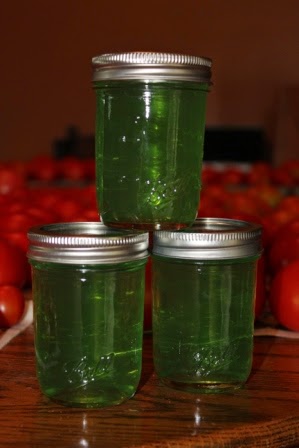
This is also the month for warm season herbs in great abundance. If you find yourself with an excess, make an herb jelly. Here is a master recipe that works with mint, basil, tarragon, lavender, rosemary and probably most other herbs.
Herb Jelly
2 ounces herb leaves, stripped from the stems (about 1 quart loosely packed)
2 1/4 cups boiling water
2 tablespoons lemon juice
3 cups granulated sugar
1 drop food coloring (optional)
3 ounces (one pouch from a 6-ounce box) liquid fruit pectin
Have ready four half pint canning jars with lids. I like to keep them warm in the water bath canner.
Place the herb leaves in a saucepan and pour the boiling water over them. Stir to thoroughly wilt all the leaves, crushing some with the spoon to release the aromatic oils. Bring the liquid back to a boil, cover, remove from the heat and allow to steep for 10 minutes. Strain through a fine sieve. Measure out 1 2/3 cups of the herb infusion and place in a large pot. (Use any remaining to flavor iced tea.)
Add the lemon juice, sugar and food coloring (if used) to the pot, place it over medium-high heat and bring to a boil, stirring constantly. When the liquid is at a rolling boil that does not stir down, add the pectin all at once. Continue boiling and stirring for one minute.
Working quickly, skim any foam from the top of the jelly, using a large metal spoon. Ladle the jelly into the hot jars, leaving 1/4 inch head space, apply caps, and process for 15 minutes in a boiling water bath.
Herb jelly can be used as a condiment on roasted meats, and is delicious when served atop cream cheese on crackers.
Gardening, cooking, and regional exploration from the beautiful Tennessee Valley
Showing posts with label herb gardening. Show all posts
Saturday, September 6, 2014
Saturday, September 28, 2013
Cool Down Boosts Veggie Production
The cooler weather and half an inch of rain have conspired to give the late summer garden a boost in productivity. Suddenly, the okra plants are producing two or three pods at a time, rather than doling them out one by one. Beans that we were ready to pull up and compost have caught their second wind. I froze several pints last week, and am going out this morning to harvest more.
Likewise, the peppers are flush with blooms and new green fruits. Because they are growing on one of our walk-in coldframes this year, the peppers should continue to bear until Thanksgiving. If the ground remains warm, even a light frost should not stop their production.
If you don't have a coldframe, you can nevertheless extend the pepper season by at least a couple of weeks. When frost is predicted, uproot the plants, shake off most of the soil and place the roots in a bucket of water. Set the plant in a protected spot, such as a garage, and the fruits should continue to ripen normally for a while longer.
Bak choy, lettuce, mache, cilantro, scallions, chervil, spinach and radishes that I have planted in the last few weeks are all up and going strong. I intend to transplant bak choy this afternoon. The others will take a bit longer to get large enough. The radishes will stay in their container until they mature. I have finally learned to thin radishes as soon as they are about an inch tall, keeping them about two inches apart. When they are the size of a marble, pull every other one for salad, and let the remaining ones mature to golf-ball size.
Jerusalem artichokes are blooming along the roadside near our house. The plant is Helianthus tuberosus, a North American native that has been used as food for centuries. They are exceptionally easy to grow, to the point that they can become invasive if not restrained. A large raised bed is best, because the plants are confined. If you plant them where they can spread freely, be sure to harvest every single tuber each fall, or they can become hard to control. Also, cut the flowers before seeds form. Otherwise, self-sown seedlings can pop up all over the garden. They make beautiful cut flowers. The tubers can be prepared in a variety of ways, much like potatoes.
Dill stars in the herb garden at this time of year, with its bright yellow flowers that attract butterflies, and the savory leaves for potato salad and fish dishes. Basil plants can start to look worn out if you have harvested them regularly. It is time to consider removing them to make way for parsley, chervil and cilantro. Preserve the flavor of fresh basil by making pesto, basil butter, or flavored oil. Recipes for all these abound on the Internet. Mint is at its best at this time of year. Harvest the smaller leaves for the best flavor. Mint can be preserved as syrup. Make a simple syrup consisting of two parts water and one part sugar. Bring to a simmer, dissolving all the sugar, and remove from the heat. Add an ounce or two of mint leaves, crushed, to the warm syrup. Allow to cool overnight, then strain. Freeze the syrup in ice cube trays, then store the cubes in a zipper bag in the freezer. Use them to add summer flavor to winter fruit dishes, and to drizzle over ice cream or cake.
Likewise, the peppers are flush with blooms and new green fruits. Because they are growing on one of our walk-in coldframes this year, the peppers should continue to bear until Thanksgiving. If the ground remains warm, even a light frost should not stop their production.
If you don't have a coldframe, you can nevertheless extend the pepper season by at least a couple of weeks. When frost is predicted, uproot the plants, shake off most of the soil and place the roots in a bucket of water. Set the plant in a protected spot, such as a garage, and the fruits should continue to ripen normally for a while longer.
Bak choy, lettuce, mache, cilantro, scallions, chervil, spinach and radishes that I have planted in the last few weeks are all up and going strong. I intend to transplant bak choy this afternoon. The others will take a bit longer to get large enough. The radishes will stay in their container until they mature. I have finally learned to thin radishes as soon as they are about an inch tall, keeping them about two inches apart. When they are the size of a marble, pull every other one for salad, and let the remaining ones mature to golf-ball size.
Jerusalem artichokes are blooming along the roadside near our house. The plant is Helianthus tuberosus, a North American native that has been used as food for centuries. They are exceptionally easy to grow, to the point that they can become invasive if not restrained. A large raised bed is best, because the plants are confined. If you plant them where they can spread freely, be sure to harvest every single tuber each fall, or they can become hard to control. Also, cut the flowers before seeds form. Otherwise, self-sown seedlings can pop up all over the garden. They make beautiful cut flowers. The tubers can be prepared in a variety of ways, much like potatoes.
Dill stars in the herb garden at this time of year, with its bright yellow flowers that attract butterflies, and the savory leaves for potato salad and fish dishes. Basil plants can start to look worn out if you have harvested them regularly. It is time to consider removing them to make way for parsley, chervil and cilantro. Preserve the flavor of fresh basil by making pesto, basil butter, or flavored oil. Recipes for all these abound on the Internet. Mint is at its best at this time of year. Harvest the smaller leaves for the best flavor. Mint can be preserved as syrup. Make a simple syrup consisting of two parts water and one part sugar. Bring to a simmer, dissolving all the sugar, and remove from the heat. Add an ounce or two of mint leaves, crushed, to the warm syrup. Allow to cool overnight, then strain. Freeze the syrup in ice cube trays, then store the cubes in a zipper bag in the freezer. Use them to add summer flavor to winter fruit dishes, and to drizzle over ice cream or cake.
Friday, December 21, 2012
Join Me for "Garden Talk" December 22
Please join me for "Garden Talk" on WNOX-FM 100.3 tomorrow (December 22nd) beginning at 8:00 AM. I will be co-hosting with Dr. Sue Hamilton, Director of UT Gardens. Listeners can call in with their gardening questions.
I will be posting information and questions/answers from the program on this blog tomorrow afternoon.
Garden Talk is sponsored by Stanley's Greenhouses. If you haven't seen what 50,000+ poinsettias in one place looks like, you should pay them a visit. I was there earlier in the week and the scene is stunningly beautiful. No pictures. You gotta go see for yourself.
I will be posting information and questions/answers from the program on this blog tomorrow afternoon.
Garden Talk is sponsored by Stanley's Greenhouses. If you haven't seen what 50,000+ poinsettias in one place looks like, you should pay them a visit. I was there earlier in the week and the scene is stunningly beautiful. No pictures. You gotta go see for yourself.
Friday, December 7, 2012
Food Gardens and Curb Appeal
Here are some of the points I made:
1) Garlic is not ugly; it just doesn’t offer much to the eye. But that
is also true of, say irises, when they are out of bloom. One way to deal with
this issue in the design of the landscape is to surround the boring thing with
something eye-catching. Annual flowers are cheap, readily available, and in
many cases edible. They also come in a sufficient array of colors as to work
with any other features of the landscape. Another approach to redirecting the
eye is to create a focal point in the middle of the bed. For this, you could
use a daylily. They are perennial, carefree, and edible. They also come in a
wide range of colors, to blend with existing plantings, if necessary.
2) Very low-maintenance plantings can be created with perennial herbs.
You get flavor, seasonal flowers and foliage all year from rosemary, French
thyme and Greek oregano.
3) Lettuces, annual herbs (basil, cilantro, dill, parsley) and numerous
other salad greens are highly decorative, although more trouble to grow than
perennial herbs.
4) Another possibility is strawberries. They remain compact, bear all season long and
have brightly colored foliage at this time of year.
These are but a few examples of things that could combine with a
garlic patch to render it not only attractive, but also productive, easily
repaying the costs involved by food production. Furthermore, the spot will be
re-used year after year, and consequently will get better and better at production
as the soil improves. This seems to me to call for a permanent border, so why
not have one that is also productive?
Also, please remember that a food garden need not be rectangular in
shape nor laid out in rows. Free form designs, or anything that works with
existing landscaping is the way to go. But instead of filling with flowers and
shrubs, you fill with food plants that perform the same visual functions in the
landscape.
You can find a lot more tips on attractive food gardens in The New American Homestead. It is
available both in paperback and as an e-book wherever books are sold.
Let me please offer one more observation that I hope will be
encouraging: a successful food garden more often results from a
lot of mental effort rather than a lot of physical effort. If well designed, a
space the size of my parlor rug could produce an amazing quantity of fresh food.Saturday, November 24, 2012
Thanksgiving Harvest
We hope everyone had a happy Thanksgiving Day with family and friends, as did we. It is always a pleasure to use homegrown ingredients in the kitchen, and the traditional Thanksgiving feast is no exception. We had cabbage, carrots, sage, parsley, thyme, scallions and lettuce from the garden. I purchased sweet potatoes at the Farmer’s Market a month or so ago, and kept them in storage. For the remaining ingredients, turkey, cranberries, and so forth, we sought out local, regional, or organic products to the extent possible. As a result, I think we had one of the tastiest, most wholesome Thanksgiving dinners in recent memory, one to be thankful for, in fact.
WINTER CROPS ENHANCE MARKET MEALS
Although the harvest in the coming months is likely to be
rather small, a touch of homegrown here and there can take a meal from routine
to special. Our number one cold weather gardening project is growing herbs.
Fortunately, our climate is sufficiently mild that French thyme, Greek oregano,
chives, sage and rosemary are perennial. Freshly cut herbs really perk up
dishes made with canned, frozen or imported produce, and growing them saves a
fortune. Typically, a little bunch of herbs at the grocery costs about $2.00,
and the amount is usually more than I need for a couple of meals. So the herbs
sometimes languish in the fridge and eventually wind up in the compost bin. Not
so with homegrown herbs.
Three members of the carrot family, parsley, cilantro, and
chervil, all grow well through the winter here. To be sure of a continuous
supply, however, it is best to give them a bit of protection. I have a pot of
chervil in the greenhouse, just in case something unfortunate happens to the
ones growing out in the garden. Parsley
can be potted up and brought indoors for the winter, or you can start a few
plants in late summer for the purpose. Outdoors, parsley grows and
produces on all but the coldest days. If you grow in a coldframe, cilantro
seeds can be started in succession all winter long. They grow slowly but will
yield enough to garnish your favorite Asian and Latino creations.
Another herb that tolerates cold well is dill. However, you
must time seed sowing so the plants will be a couple of feet tall before frost
arrives. This can be tricky, since the seeds take a long time to germinate. My
last sowing is only about six inches tall now, and refuses to grow taller. I
suspect I will have a bumper crop of dill in the spring, but during cold
weather I will have to be content with a few sprigs here and there.
Cabbage and carrots have been our best fall crops. We
enjoyed coleslaw made from freshly picked ‘Savoy Perfection’ cabbage for
Thanksgiving. This cultivar is recommended for fall sowing, and tolerates cold well, as do most plants with "savoyed" leaves. More heads of this and ‘Early Flat Dutch’ await harvest in the
greenhouses. Carrots in outdoor beds remain crisp and delicious all winter, and
we pull them as needed.
Spinach that we planted in September is now ready for
picking, and this year’s crop is among our better efforts. We sow the seed heavily,
then thin for baby spinach when the plants are four inches tall. When they
reach six inches, we pick entire plants and leave others to grow throughout the
winter. By leaving larger plants with
space between, we can extend the harvest until next February.
Our favorite local garden center, Stanley’s Greenhouse, is
planning to offer grafted tomatoes next season. We can’t wait to try this new
concept. Grafted tomatoes have been used for commercial production for years,
but recently growers have begun grafting them for the home gardener. The idea
is simple. An heirloom plant with desirable fruit characteristics is grafted
upon a rootstock with disease and pest resistance. Presto! A plant with
heirloom taste and hybrid adaptability. Monte Stanley told me he plans to offer
five types, including the popular Cherokee Purple and the scrumptious
Brandywine. Thomas Jefferson grew Brandywine tomatoes at Monticello, but
they are difficult to grow in the Tennessee Valley because they lack disease
resistance. This may be an opportunity for homegrown taste Jefferson would have
appreciated.
If you are interested in grafted tomatoes, it might be wise
to let them know at Stanley’s, as quantities will necessarily be limited.Saturday, September 29, 2012
You Can't Grow That!
Following are the highlights of a presentation I gave today for the University of Tennessee Gardens Fall Symposium. The theme of the symposium this year was "Incredible Edibles."
“You can’t grow that!” is the reaction I often get when I suggest to one of my gardening friends that I plan to try such-and-such next season. However, every time I look for information on a food crop that supposedly does not grow in Zone 7, I find plenty of suggestions and advice from gardeners who have done just that. In a minute, I will cite some examples of tropical and sub-tropical food plants that you certainly can grow.
I was appalled by an article I read recently that suggested producing the majority of our food locally is an impossible dream. I wonder how the Native Americans who occupied this Valley centuries before Europeans arrived would have reacted to that remark? Many of them were farmers as well as hunter-gatherers, and this region of the world is unusually lucky in having an abundance of edible wild plants. I have several examples of those to share with you today, also.
A third group of food plants includes some that lots of people apparently grow, but for some reason you never hear much about. I will offer two examples from this group.
First, however, let’s look at some plants you “can’t” grow here.
Tropical and Sub-tropical Plants:
Banana
Plants grown in large containers outside during the warm months will produce fruit. Dwarf and super-dwarf cultivars are available in the nursery trade. The one pictured, ‘Novak,’ fruits at only 4 feet tall.
The growing medium must be well-drained. Bananas do not tolerate wet feet. Fertilization with a balanced formula monthly is necessary. Bananas need about 1 ¼ ounces of nitrogen per month when young, and double that amount when mature. If your fertilizer is 8 percent nitrogen, that is, the NPK numbers are 8-x-x, you should apply a pound of this fertilizer around the base of the plant monthly, gradually increasing the application to two pounds over the course of the season. If the temperature at night is below 50°F, as during overwintering in a garage perhaps, don’t fertilize.
While bananas are generally tolerant of cold down to 28°F, they perform best when grown under constantly warm to cool conditions. If winter storage is a problem, however, you can take several steps to keep your banana plants growing. First, if you have a suitable sheltered spot exposed to southern sun, you can probably overwinter a banana plant outdoors as far north as Zone 4. This is accomplished by cutting it down, covering the base with a bushel basket, and piling leaves on top to protect the underground stem . Do this as soon as frost kills most of the top growth. Check such plants frequently in early spring and remove the covering as soon as shoots emerge. Be ready with a frost blanket in case of a late cold snap. A more reliable way of overwintering is to dig up small shoots and pot them in containers as houseplants for the winter. Grow in a bright, warm location and fertilize lightly until you are ready to move them outside again. Generally, you allow only two shoots to develop. The older one will fruit and the other will provide the subsequent crop.
Bay Laurel
This frost-tender shrub or small tree prefers rich, organic, well-drained soil. It grows best as a container plant, in full sun to partial shade. Do not allow plants to dry out, but do not allow soil to become soggy. Use a growing medium intended for citrus, if available. Can be successfully overwintered in Knoxville if grown in a sheltered location and the soil is prevented from freezing by deep mulch, an adjacent building foundation, or a water feature.
Citrus
The photo is my Meyer lemon ‘Improved’ on a dwarf rootstock. This is a hardy citrus that will tolerate cold down to 34 degrees F. Kumquats, such as ‘Meiwa,’ can take it down in the 20s. The vast number of selections of grafted citrus means you must pay attention to rootstock and graft alike. Citrus prefers a gritty, well-drained growing mix and plenty of water and fertilizer when young. Drought tolerant as they get older. Water citrus when the top one inch of growing mix feels dry when you stick your finger into the soil. Feed once when the plants move outdoors, and again about three months later, using a good, balanced organic fertilizer. Formulas made just for citrus are recommended and available from garden centers or by mail order. Glossy, dark green leaves indicate that the plant is receiving adequate nutrition. When in doubt, err on the side of less food and less water. Too much of either one will result in leggy, unsightly growth and poor fruit production.
In the second year after transplanting nursery stock, you should expect a few fruits. Thereafter, fruit production will increase with the size of the tree. Lemons and limes can bear almost at any time of year, but most other varieties bear the best crop after their spring bloom. Leaving the fruit on the tree until you are ready to eat it is the best bet, as the fruit becomes larger and flavor improves with time. Don’t wait until the fruit begins to dry out, however, before picking. Among the numerous varieties of citrus available, consider one or more of the following. Meyer lemon is a small form with smooth, thin-skinned fruit and reasonable cold tolerance. Kumquats have good cold tolerance and adapt well to containers. Selections include ‘Nagami’ and ‘Meiwa,’ both of which bear during fall and winter. Mandarin oranges and tangerines also exhibit good cold tolerance, but with some varieties, such as the Clementine tangerine, you need two plants for successful pollination. Varieties to try include Satsuma, Owari, Clementine, Dancy and Changsha tangerines, and Minneola and Orlando tangelos.
Figs
Figs have been grown for centuries, and can be over-wintered outdoors in Knoxville in a sheltered spot. ‘Brown Turkey,’ ‘Celeste’ and ‘Chicago’ are popular cold-tolerant cultivars. Grow in any reasonable soil in a spot sheltered from winter winds. Keep root suckers pruned off and head back the tree to maintain shape. All are considered easy to grow, with water management being a more important consideration than soil fertility. Poorly drained, constantly wet soil will rot the roots, but trees should not dry out to the point that leaves begin to wilt. Since the tree should be sited in as much sun as possible, water needs during hot weather can be significant.
Purchase nursery-grown stock of a known cultivar, or root a cutting from a tree of known provenance. Cuttings taken in August will root readily and can be transferred to their permanent location the following year. Plant the tree a little deeper than it was growing in the nursery container, using a well-drained mix such as has been previously recommended for growing avocado and citrus. Add a little bone meal to the mix at planting time. Figs are not heavy feeders and phosphorus is more important for them than nitrogen. You will need a container holding fifteen to twenty gallons of potting mix to accommodate a mature fig tree. Trees can be kept in bounds by thinning the main stems and by root pruning every three years.
Overwintering a container fig is relatively easy. When leaves fall, move the tree indoors to a cool spot. Light is unnecessary while the tree is dormant, so even a closet will do. Water about once a month. As the weather begins to warm up, gradually acclimate the tree to outdoor conditions, and new buds should begin to swell. Thereafter, resume your normal schedule of watering. Work a few tablespoons of bone meal into the top layer of soil when the plants are growing well again.
A fig tree planted in the ground in a sheltered spot can be successfully overwintered if the roots are protected from freezing. When dormant, the tree can be wrapped in a frost blanket until warm weather returns. Gardeners as far north as Zone 5 report success with this technique. Some drape the tree with Christmas lights connected to a timer, thus providing extra warmth on cold nights.
Olives
Olives typically do not do well in the humid South, but the Spanish Arbequina cultivar does perform well here. I saw olives fruiting in small pots at the Farmers Market this summer. They are decorative plants that adapt well to container culture. Use a well-drained mix, such as intended for citrus or palms, and keep well-watered and fertilized during the growing season. Hold back on water during the winter, but do not allow to dry out completely, and keep the plant in a sunny window.
Unusual ornamental edibles:
Elderberry
Tolerant of poor soils, drought and shade, the native elderberry is a reliable and easy edible shrub. Two plants are needed for pollination, except in the cultivated varieties ‘Nova’ and ‘York.’ European elderberry is also available; ‘Black Lace’ is a particularly decorative selection.
Pawpaw
This Native American tree is under-appreciated. Usually found in rich, moist, organic soil near rivers and streams. Once established, the trees are rarely bothered by pests or disease. Selections available in the trade. Choose two different varieties to insure pollination. The tree is the host plant for the zebra swallowtail butterfly, and chilled pawpaw is said to have been George Washington’s favorite dessert.
Persimmon
A sturdy native American tree, persimmon is self-fertile. Several cultivated varieties are available, along with a hybrid between the American and Asian persimmon species. Attractive checked bark and fruits remaining after leaf fall create year round interest in the landscape. Tolerates a wide variety of conditions, but prefers rich, well-drained soil high in organic matter.
Prickly Pear
Native to the desert Southwest, but naturalized in some places around here, this cactus can grow to an impressive size, provided it has plenty of sun and well-drained soil. Handle with extreme care. Tiny spines come loose and work themselves into your skin if touched. Fruits are used for juice, jam and wine-making. Leaf pads are de-spined and eaten as a vegetable, nopalitos, available canned in the Latin section of the grocery store.
A fruiting tree with four season interest: spring flowers, summer fruits, fall foliage and winter bark and buds. Fall foliage color is often spectacular. Numerous cultivares are widely available, and tolerant of just about anything but wet feet.
Yucca
Often called “bear grass” this desert native is naturalized throughout the Southeast. Flowers are edible raw or in stir fries and omelets. (Some people may have a reaction, but this is rare. Eat only one flower the first time.) Trim out the centers and chop them separately, using the petals whole.
Completely Unexpected:
Ginger
You can easily produce a year’s supply from a couple of purchased roots. Look for those with attached green stems, and use the best-looking ones to start your plants. Select a container at least four times larger than the piece of rhizome you are planting. A 12 to 14 inch azalea pot works well. This will allow for the development of an extensive root system. Fill the container three quarters full with a good, well-drained potting mix containing plenty of compost. Place the rhizome on top of the mix with the eyes pointing upward. Cover with more potting mix and water well. Place the container in a plastic bag in indirect light until green shoots appear. (This can take a month.) Then remove the bag and water well. Keep the plant in bright, indirect light and never allow the soil to dry out. Growing plants need protection from wind and should be brought indoors any time the temperature is headed below 50°F. The ideal growing temperature is 75°F to 85°F. Water and feed regularly, like most houseplants.
Saffron
Saffron crocus grows like any other crocus, but blooms in fall, not spring. It grows well in Zones 6 through 9, and prefers good, well-drained soil in full sun. A patch of ten square feet, enough to accommodate about 50 bulbs, will provide an increasing abundance of spice as the plants mature and multiply. Set them out in summer, while they are dormant, six inches apart and three inches deep. Drainage is essential. Avoid keeping the soil too wet when the plants are dormant. You can overplant, if you wish, with annuals, but take care not to irrigate too much. Pull up the annuals when you see the new green shoots of saffron poking through the soil in autumn. When the lovely lavender-blue flowers open a few weeks later, harvest by picking the bright red stigmas by hand. You can use them immediately in such Mediterranean dishes as paella, bouillabaisse, and risotto, or dry them for a few days before storing in an airtight container for later use.
With just a little planning, your yard can become more beautiful and productive. Just be sure not to listen to anyone who says, “You can’t grow that!”
Saturday, August 18, 2012
Planting a Fall Garden
Somehow I managed to delete last week's post on planting fall root vegetables. Sorry about that! In that post, I offered some tips for gardeners who like to plant by the moon, along with some suggestions for fall growing. To summarize, in August and September you still have plenty of gardening opportunities. Root crops for fall planting include beets, carrots, scallions and turnips. According to the moon, the next good planting time is between September 1 and September 14. Leeks for overwintering should go in the ground right away, however, if you have not already started plants. They can take a long time to mature.
Perennial onions, shallots and garlic should all be planted during the first two weeks of September, also. Choose the best bulbs from this summer's garlic harvest and replant the cloves for next year. Find starts for perennial onions and shallots online, or ask your gardening friends if they are willing to share.
From now until the end of August is a good time to transplant bak choy, broccoli, Brussels sprouts, cabbages, and cauliflower, along with parsley, cilantro and Swiss chard. If you did not start seeds last month, you can find plenty at the local garden centers. I am seeing more offerings of fall vegetable starts and seeds this year than ever before.
From now until the end of August is a good time to plant some favorite fall green crops. Lettuces, kale, Asian mustards, corn salad, spinach and chervil are all great choices for a fall garden. Along with late tomatoes, their tender greens make tasty, nutritious salads.
Sweeten the pot with peas, either English (shelling), snap or snow. All varieties tend to perform better as a fall crop in the Tennessee Valley region. Now is the perfect time to plant, as the weather begins to moderate and rainfall returns. We have grown many varieties, but the original 'Sugar Snap' remains our favorite for an edible podded pea. Among snow pea varieties, 'Dwarf Gray Sugar' abundantly yields pods only an inch and a half long from lovely bi-color pink flowers. 'Mammoth Melting Sugar' produces huge pods, and is a reliable cultivar. Most peas will do best if given some support. These three demand it, as they all can grow to six feet. If you bother with shelling peas, old stand-bys like 'Lincoln' and 'Green Arrow' still perform.
Lettuce
Plant fall lettuce cultivars in the opposite order that you followed in spring. Start with heat tolerant Romaines, and follow in succession with increasingly cold tolerant varieties. Looseleaf, then butterhead, is my preference. It is worth noting that red coloration and a savoyed (frilly) leaf texture usually indicate cold tolerance. Flat, green leaves do better in warmer temperatures. Here in the Tennessee Valley, any lettuce is worth a try between now and the onset of freezing temperatures.
A classic Romaine lettuce that has been offered by our local seed company for many years is a dependable performer. Another good Romaine to plant now is ‘Rouge d’Hiver.’ Both mature in about 70 days or a little less. Some other possibilities that we have tried include ‘Forellenschluss’ and ‘Freckles’ both of which have green leaves with reddish brown markings, and a sharper flavor than plain green Romaine. Burpee touted a dwarf variety, ‘Little Ceasar’ this year, but we did not have room to try it.
Kale
Kale is a dependable and super-nutritious fall crop. By choosing more than one cultivar and planting in succession, you can have fresh kale all winter long here in Zone 6b.
Kale is classified by its leaf shape into several types. All are varieties of wild cabbage, Brassica oleracea Acephala Group. Scotch Kale is characterized by its extremely curly leaves. Popular cultivars include:
· Dwarf Blue Curled Scotch—good for containers because of its smaller size, this kale matures in only 55 days, but can be used when younger for salad greens.
· Redbor and Winterbor—cold hardy types, maturing in 55-60 days; Redbor has deep red-purple leaves. Very young leaves are tender enough for salads.
Russian Kale has flat leaves, often with ragged edges. ‘Vates’ is the cultivar most often seen in seed racks, but ‘White Russian’ and ‘Red Russian’ are other good choices. Red kales tend to mature a little earlier than their white counterparts. In this case, the difference is about a week. All three of these can be eaten within a month of sowing as salad greens.
For maximum cold tolerance, consider ‘Lacinato’ kale for a later crop. This one spent last winter in my coldframe and produced plenty of delicious leaves. It is almost black in color, because of its dark blue-green pigmentation. The leaves are long, straplike, and crinkled like seersucker. Maturing at about 65 days, it is at its most flavorful after a frost. A late August planting should be ready by Halloween.
Mature kale is delicious stir fried with a little garlic and soy sauce. You can also coat the leaves lightly with oil and soy sauce and place on a sheet pan in a 200 degree oven until they are crisp, for a healthy snack. Around here, the traditional way to enjoy kale or other cooking greens is to simmer them a long time in a little water with a ham hock or pieces of bacon or fatback tossed in, then serve them with cornbread to sop up the delicious juices, or "pot likker." If you want to come close to the traditional taste without the meat, try this approach:
New-Fashioned Greens with Pot Likker
Wash 1 pound fresh kale, turnip, or mustard greens, or a combination. Pat dry with kitchen towels. Stack the leaves and cut them into ribbons about an inch wide. Bring a large pot of water to a boil. Drop in the greens and simmer 1 minute. Drain in a colander and immediately rinse in cold water to set the color. Return the greens to the pot and add 1 cup vegetable stock, 1 small onion, chopped, and a pinch of salt. Simmer until the greens are meltingly tender, about half an hour. Taste carefully and correct the seasoning. Serve over cornbread, garnished with a little grated cheese, if you prefer.
Friday, June 8, 2012
Basil, Summer's Herb
Summer's best herb is, arguably, basil. Gnocchi with pesto has to be one of the brightest stars in Italy’s culinary universe, or indeed among great dishes generally. Basil also figures prominently in the cooking of other Mediterranean countries, and Thailand has its own special love affair with this herb. No surprise there, as basil originated in Asia. Other countries in Asia’s warmer regions feature basil in their cooking, also.
The most common form, sweet basil, is Ocimum basilicum, a member of the mint family. This is the familiar green basil found in every garden center in spring. Several other species and varieties are cultivated, and there are some hybrids, also. Thai basil has overtones of anise or licorice, and grows larger than Italian varieties. Botanically, it is O. basilicum var. thyrsiflora. Lemon basil, another popular garden subject, is a hybrid, O. x citriodora.
We started seeds of four basil varieties this season (left to right in the image): Boxwood, Red Rubin, Siam Queen and Mammoth. Siam Queen is (not surprisingly) a Thai basil cultivar; the others are all sweet basils. Mammoth produces huge leaves that are suitable for wrapping food for steaming or for making pesto. Red Rubin has a citrusy character and deep purple foliage. It is also less inclined to revert to green than some of its red cousins. Boxwood forms a tight mound about the size of a soccer ball, thickly overgrown with petite leaves. It makes a great border plant and has plenty of basil flavor.
Although basil turns up in garden centers in April, we like to wait until after Memorial Day to plant it, when the soil has thoroughly warmed. Basil resents cold. If set out too early and they get a chill, the plants will often be stunted for the rest of the season. The plants grow so rapidly in summer heat and humidity that if planted now they will be ready in a few weeks, in time for the first tomatoes. We started our seeds April 30, and they are ready to transplant now.
Basil famously partners with tomatoes in many dishes. It also goes well with cucumbers, and in soups generally. You will nevertheless run out of things to do with fresh basil this summer, because the harvest is likely to be so abundant. Don’t bother drying the surplus; dried basil tastes like hay. Instead, preserve the flavor with fat, then freeze it. There are two ways to do this. Either combine about a tablespoon of basil with a stick of softened butter, form into a log, wrap in foil and freeze, or, make pesto, leave out the cheese, and freeze in small portions. Add cheese after thawing, and use like fresh pesto.
Another way to preserve basil flavor is to make vinegar. For this purpose, I prefer to use a red basil, because it imparts a nice color to the finished product. Any type of basil will work, however. Harvest as many basil leaves as you like and pack them tightly into a measuring cup, but not so tightly as to crush them. For each cup of leaves, measure half a cup of white wine or rice vinegar. Place the leaves in a suitable jar, cover with the vinegar, and use a wooden spoon to tamp down the leaves so they stay submerged. (You may have to do this again a time or two over the next several days.) Place the jar in the refrigerator, and note the date. After two weeks, strain off the vinegar, discard the basil, and replace it with a freshly harvested batch. Return the vinegar to the refrigerator for two weeks more. Strain off the vinegar, discard the basil, and store the vinegar in a sterilized bottle in the refrigerator for up to 6 months.
Basil-flavored olive oil is dreadfully expensive in the market, but you can make your own at home. Use about a cup of loosely packed leaves for a cup of extra-virgin olive oil. Bring a large pot of water to a boil, add the leaves, blanch for 5 seconds, drain into a colander and run cold water over the leaves to set their color. Pat dry with paper towels and place the leaves in a double boiler with the oil. Bring the water in the double boiler to a simmer, and steep the basil in the oil for 10 minutes. Transfer to a blender jar and let cool. Blend well, then place in the refrigerator overnight. The next day, bring the oil to room temperature. Strain it first through a fine sieve to remove most of the solids, then strain through a coffee filter previously moistened with a few drops of canola oil. (This prevents the filter from soaking up much of your product.) The second straining can take all afternoon, so be patient. Store the finished oil in a sterilized bottle in the refrigerator, and use within six months. Drizzle it over grilled chicken, or practically anything else!
Saturday, June 2, 2012
Green Bean Season
The season for green beans has arrived. We are picking more than we can eat, and have been sharing them with friends. Our first planting this season is ‘Contender,’ and it would certainly vie for the blue ribbon at any county fair. Pods remain stringless even when they are a bit overmature. Nevertheless, for best quality, these should be picked when they are about 3/8 inch in diameter and 6 inches long for perfect snap beans.
We also tried picking smaller specimens, about the diameter of a pencil and 4-5 inches in length. These were excellent when steamed briefly, but become mushy if even slightly overcooked.
Contender is a brown-seeded green bean, which is a good indicator of its value as an early crop. Brown seeds tend not to react so negatively to cool soil as do white bean seeds. But this year, we had warmth so early it hardly made any difference. Our second planting ‘Fantastic Filet’ is coming right along on the heels of Contender. This bean is intended for “haricots verts” or baby beans, and should be picked when about 3/16 inch in diameter. Trim the stem ends and steam them whole for about a minute. Do not overcook.
Savory, The Bean Herb
If you have never grown summer savory and you like green beans, you have missed out on a treat. We grew savory for the first time this year. It was easy to produce from seed. We started the plants indoors under lights in early April, maintaining them in four-inch pots until they were about 6 inches tall. At transplant time, we pinched out the main growth point to encourage bushiness. Shortly after transplanting to the herb bed a couple of weeks ago, they enjoyed a burst of growth, and we now have all the fresh leaves we need. Savory has a flavor reminiscent of thyme, but different. A tablespoon of chopped fresh leaves can be added to two tablespoons of melted butter for the perfect sauce for steamed green beans. Also try adding it to the pot when you cook green beans “Southern style” with added pork fat and a cooking time of half an hour or more. The flavor of savory somehow just makes green beans taste better.
Savory can be added to any herb blend where thyme would be at home, and is often included in Herbes de Provence. Use it interchangeably with sage when making dressing or sausage.
Friday, May 18, 2012
Bloomsdays A Great Success
Bloomsdays at UT Gardens last weekend was a great success despite the rainy weather on Sunday. Saturday morning saw crowds thronging around the many booths, with vendors offering plants, garden art, and much more. The annual event just gets better and better.
James Newburn, Assistant Director of UT Gardens, told me they have hired a part-time person whose efforts are devoted exclusively to the Kitchen Garden. As you can see from the image at left, this is a large area with raised beds and many other features that would be the envy of any dedicated veggie grower. The buildings visible at the far end include two storage sheds and a shaded spot planted with mints. A rain barrel catches water from the roofs in this area, and there is a weather station housed in one of the sheds. The entire space is enclosed in a picket fence, with compost bins built along one side. Outside the fence, on the left side in this view, the staff has planted blackberries, raspberries and elderberries.
All the plantings integrate herbs, flowers and vegetables. Although it is mid-May, the beds were already hosting tomato, squash, cucumber and okra plants no doubt started in the greenhouses adjacent to the Gardens.
The Kitchen Garden illustrates virtually all of the design techniques that one might want to use. If only we all had this much space! And not everyone I have talked to likes the purple paint, but each to his own tastes.
Here's a shot of the raspberries outside the kitchen garden.
UT Farmers Market
On the Wednesday following Bloomsdays, May 16th, the UT Farmers' Market opened at UT Gardens. Complete with music from a banjo and guitar duo, the market offers produce from UT crop production classes, along with creations from the UT Culinary Institute and food and craft items from about a dozen local vendors. Some of these were familiar from other area farmers' markets, but not all.
The market is held at the Gardens every Wednesday from 4:00-7:00 PM from now until October 24.
James Newburn, Assistant Director of UT Gardens, told me they have hired a part-time person whose efforts are devoted exclusively to the Kitchen Garden. As you can see from the image at left, this is a large area with raised beds and many other features that would be the envy of any dedicated veggie grower. The buildings visible at the far end include two storage sheds and a shaded spot planted with mints. A rain barrel catches water from the roofs in this area, and there is a weather station housed in one of the sheds. The entire space is enclosed in a picket fence, with compost bins built along one side. Outside the fence, on the left side in this view, the staff has planted blackberries, raspberries and elderberries.
All the plantings integrate herbs, flowers and vegetables. Although it is mid-May, the beds were already hosting tomato, squash, cucumber and okra plants no doubt started in the greenhouses adjacent to the Gardens.
The Kitchen Garden illustrates virtually all of the design techniques that one might want to use. If only we all had this much space! And not everyone I have talked to likes the purple paint, but each to his own tastes.
Here's a shot of the raspberries outside the kitchen garden.
UT Farmers Market
On the Wednesday following Bloomsdays, May 16th, the UT Farmers' Market opened at UT Gardens. Complete with music from a banjo and guitar duo, the market offers produce from UT crop production classes, along with creations from the UT Culinary Institute and food and craft items from about a dozen local vendors. Some of these were familiar from other area farmers' markets, but not all.
The market is held at the Gardens every Wednesday from 4:00-7:00 PM from now until October 24.
Friday, May 11, 2012
Whippoorwill Winter
My grandparents would characterize this week's spate of lows in the 40s as "Whipporrwill Winter." By traditional reckoning, this is the last cold snap of the season, and we should have uninterrupted warmth from now until autumn. For those unfamiliar with our local lore, the earliest cold snap is "Dogwood Winter," which arrives as the trees are in bloom. A few weeks later "Blackberry Winter" arrives, as the snow white blooms of wild blackberries appear. Finally, the current cool-down, when the whippoorwills can be heard in the evening, calling out for a mate, provided you live far enough out in the country. (A bigger challenge each year, it seems.)
Tomato, pepper and eggplant plants can go into the ground now that we've passed this weather milestone. Many of us went ahead a planted tomatoes a couple of weeks ago, on the assumption that the season is running about a month early. Tomatoes don't seem much affected by a cool spell. They just sit there until things warm up. But peppers can be stunted by spending a night out in the cold, and eggplant is likely to develop an infestation of flea beetles. With these two, it is always better to wait than to rush the season.
This is also the season for herbs. Even the specimens in the supermarket look fresh and flavorful. In the garden, oregano, French thyme (at left) and tarragon are going gangbusters, and it will not be long before we have plenty of parsley. (I was late getting plants started this year.) Chives are blooming, and the sage plants are rapidly adding new leaves.
One of the best ways to preserve herb flavors is to make compound butter. Nothing could be simpler. Just soften a stick of butter, then use a fork to combine it with 1 tablespoon of minced fresh herbs. Turn the mixture out on to a piece of foil and shape into a log. Wrap in the foil and freeze. Tarragon butter makes a great topping for asparagus, also now in season.
Local Food Report
With farmers markets in full swing, no one has an excuse not to eat local. Our weekly check of Three Rivers Market turned up the usual suspects: arugula, bok choy, chard, lettuce, kale, and radishes. Strawberries and early red raspberries are abundant. The area farmers markets offer a much better selection, including French dandelion greens, asparagus, a kaliedoscope of lettuce varieties, early onions, and much more.
Tomato, pepper and eggplant plants can go into the ground now that we've passed this weather milestone. Many of us went ahead a planted tomatoes a couple of weeks ago, on the assumption that the season is running about a month early. Tomatoes don't seem much affected by a cool spell. They just sit there until things warm up. But peppers can be stunted by spending a night out in the cold, and eggplant is likely to develop an infestation of flea beetles. With these two, it is always better to wait than to rush the season.
This is also the season for herbs. Even the specimens in the supermarket look fresh and flavorful. In the garden, oregano, French thyme (at left) and tarragon are going gangbusters, and it will not be long before we have plenty of parsley. (I was late getting plants started this year.) Chives are blooming, and the sage plants are rapidly adding new leaves.
One of the best ways to preserve herb flavors is to make compound butter. Nothing could be simpler. Just soften a stick of butter, then use a fork to combine it with 1 tablespoon of minced fresh herbs. Turn the mixture out on to a piece of foil and shape into a log. Wrap in the foil and freeze. Tarragon butter makes a great topping for asparagus, also now in season.
Local Food Report
With farmers markets in full swing, no one has an excuse not to eat local. Our weekly check of Three Rivers Market turned up the usual suspects: arugula, bok choy, chard, lettuce, kale, and radishes. Strawberries and early red raspberries are abundant. The area farmers markets offer a much better selection, including French dandelion greens, asparagus, a kaliedoscope of lettuce varieties, early onions, and much more.
Thursday, January 13, 2011
What We Could Be Growing Now
January's cold, gray weather often keeps us indoors, so we make good use of the time by developing a garden plan for the coming year. Over time I have learned that planning a summer garden is relatively easy, while spring, fall and especially winter vegetable gardens are more challenging.
One trick I have learned for planning a winter garden is to make a list of vegetables I could be enjoying now, had I planned better last year. For example, I really should have potted up more rosemary to bring inside, as we have harvested all we dare from the one plant we saved. In fact, I intend to create a indoor herb garden for next winter by growing my favorite herbs in containers planted around the first of June. These won't be picked all summer, as we will have plenty of herbs in the garden beds, then. A month before bringing the pots inside, I'll give them all a good pruning, and use or dry the cuttings. That should cause them to put on new growth before they come inside around the end of October. My aim is to bring them indoors just before the first hard freeze. Besides French thyme, Greek oregano and rosemary, my three kitchen staples, I will certainly have a pot or two of parsley.
Because it tolerates some shade, parsley is excellent for growing in a windowsill garden. You can start plants just for the purpose, sowing seeds around the first of June, or in the fall dig a plant out of the garden and pot it up. Use a the largest pot you can manage, and feed the plant a soluble fertilizer to encourage plenty of foliage growth.
Coldframe Crops
With a larger coldframe we could be producing taller plants all winter. With more square feet under plastic, we could easily grow all the cilantro, parsley, dill, chervil, beets, Swiss chard, carrots, corn salad, arugula, mizuna, tatsoi, bak choi, chives, lettuce, scallions and leeks we could use. This is an area I intend to give more effort to during the 2011 growing season. Besides crops that are harvested in winter, cultivars selected for their ability to overwinter and produce a crop very early are worth some experimentation.
Storage Crops
The next best thing to fresh, homegrown produce is produce that has been preserved at home, captured at the peak of flavor. Freezing is the main way I preserve fresh veggies, but I also make pickles. Next season, I may purchase a pressure canner and expand my options in the canning realm. Also, I hope to take advantage of seasonal abundance at the Farmer's Market to put up my own tomatoes, fruit preserves and jam.
The garden will have some space devoted to storage crops, a bit more than last year. Potatoes, garlic and shallots are the main ones, and we plan to experiment with perennial onions. They have to be fall planted, though, so we will not see results during 2011.
Root cellar crops, such as beets, carrots, cabbage and turnips, are also on our list. Another possibility is sweet potatoes, although they take up quite a bit of room in the garden. I seldom see my favorite type, the true yam or "white sweet potato" that my grandfather grew, although they turn up from time to time at the Farmer's Market. If I can find some plants, I'll make room for them. Otherwise, I'll rely on the Farmer's Market for sweet potatoes, along with winter squash and pumpkins. Squash family crops typically outgrow our space and many are beset by the squash vine borer, a serious pest.
New Introductions
One of our main garden goals for 2011 is to establish a berry patch. We want to grow our own strawberries, raspberries, and possibly blueberries. We will include progress reports on this and other projects in future posts.
One trick I have learned for planning a winter garden is to make a list of vegetables I could be enjoying now, had I planned better last year. For example, I really should have potted up more rosemary to bring inside, as we have harvested all we dare from the one plant we saved. In fact, I intend to create a indoor herb garden for next winter by growing my favorite herbs in containers planted around the first of June. These won't be picked all summer, as we will have plenty of herbs in the garden beds, then. A month before bringing the pots inside, I'll give them all a good pruning, and use or dry the cuttings. That should cause them to put on new growth before they come inside around the end of October. My aim is to bring them indoors just before the first hard freeze. Besides French thyme, Greek oregano and rosemary, my three kitchen staples, I will certainly have a pot or two of parsley.
Because it tolerates some shade, parsley is excellent for growing in a windowsill garden. You can start plants just for the purpose, sowing seeds around the first of June, or in the fall dig a plant out of the garden and pot it up. Use a the largest pot you can manage, and feed the plant a soluble fertilizer to encourage plenty of foliage growth.
Coldframe Crops
With a larger coldframe we could be producing taller plants all winter. With more square feet under plastic, we could easily grow all the cilantro, parsley, dill, chervil, beets, Swiss chard, carrots, corn salad, arugula, mizuna, tatsoi, bak choi, chives, lettuce, scallions and leeks we could use. This is an area I intend to give more effort to during the 2011 growing season. Besides crops that are harvested in winter, cultivars selected for their ability to overwinter and produce a crop very early are worth some experimentation.
Storage Crops
The next best thing to fresh, homegrown produce is produce that has been preserved at home, captured at the peak of flavor. Freezing is the main way I preserve fresh veggies, but I also make pickles. Next season, I may purchase a pressure canner and expand my options in the canning realm. Also, I hope to take advantage of seasonal abundance at the Farmer's Market to put up my own tomatoes, fruit preserves and jam.
The garden will have some space devoted to storage crops, a bit more than last year. Potatoes, garlic and shallots are the main ones, and we plan to experiment with perennial onions. They have to be fall planted, though, so we will not see results during 2011.
Root cellar crops, such as beets, carrots, cabbage and turnips, are also on our list. Another possibility is sweet potatoes, although they take up quite a bit of room in the garden. I seldom see my favorite type, the true yam or "white sweet potato" that my grandfather grew, although they turn up from time to time at the Farmer's Market. If I can find some plants, I'll make room for them. Otherwise, I'll rely on the Farmer's Market for sweet potatoes, along with winter squash and pumpkins. Squash family crops typically outgrow our space and many are beset by the squash vine borer, a serious pest.
New Introductions
One of our main garden goals for 2011 is to establish a berry patch. We want to grow our own strawberries, raspberries, and possibly blueberries. We will include progress reports on this and other projects in future posts.
Subscribe to:
Comments (Atom)


